

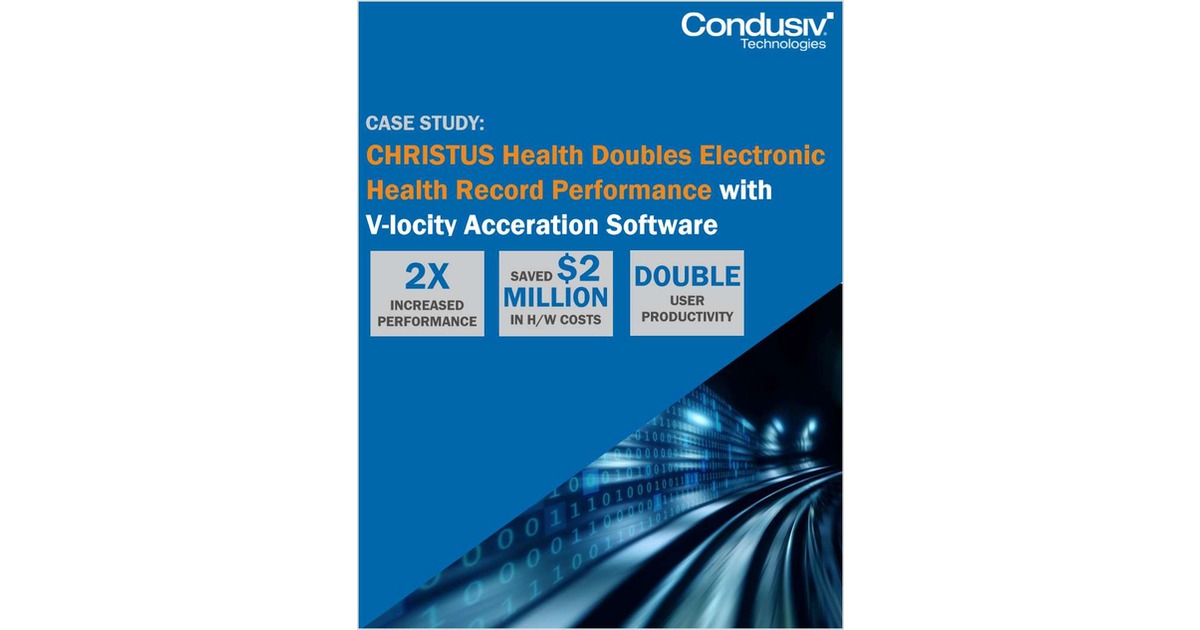
CHRISTUS Health Doubles Electronic Health Record Performance with V-locity Throughput Acceleration Software
Saved Millions in Hardware Costs | Today it sits on over 2,500 VMs supported by EMC all flash arrays. Couldn’t be a more winning scenario. Just before CHRIST...
Key Takeaways for Enterprise Leaders
Actionable strategies verified against enterprise industry benchmarks and real-world rollouts.
Statistical evidence and market data to support executive budgeting and strategic alignment.
Executive Abstract
Peer ReviewedJust before CHRISTUS pulled the trigger on a $2 Million storage purchase to improve the performance of their electronic health records application (MEDITECH®), they evaluated V-locity® I/O reduction software.
After an initial conversation with anyone about V-locity, the first response is generally the same – skepticism. Can software alone really accelerate the applications in my virtual environment? Since we are conditioned to think only new hardware upgrades can solve performance bottlenecks, organizations end up with spiraling data center costs without any other option except to throw more hardware at the problem.
CHRISTUS Health, like many others, approached us with the same skepticism. But after virtualizing 70+ servers for their EHR application, they noticed a severe performance hit from the “I/O blender” effect. They needed a solution to solve the problem, not just more hardware to medicate the problem on the backend.
Since V-locity comes with an embedded performance benchmark that provides the I/O profile of any VM workload, it makes it easy to see a before/after comparison in real-world environments.
After evaluation, not only did CHRISTUS realize they were able to double their medical records performance, but after trying V-locity on their batch billing job, they dropped a painful 20 hour job down to 12 hours.
In addition to performance gains, V-locity also provides a special benefit to MEDITECH users by eliminating excessive file fragmentation that can cause the File Attribute List (FAL) to reach its size limit and degrade performance further or even threaten availability.
Tom Swearingen, the manager of Infrastructure Services at CHRISTUS Health said it best. "We are constantly scrutinizing our budget, so anything that helps us avoid buying more storage hardware for performance or host-related infrastructure is a huge benefit."
Unlock Report Access
Provide your corporate details for instant PDF access.
Related Executive Research
 Asset
Asset
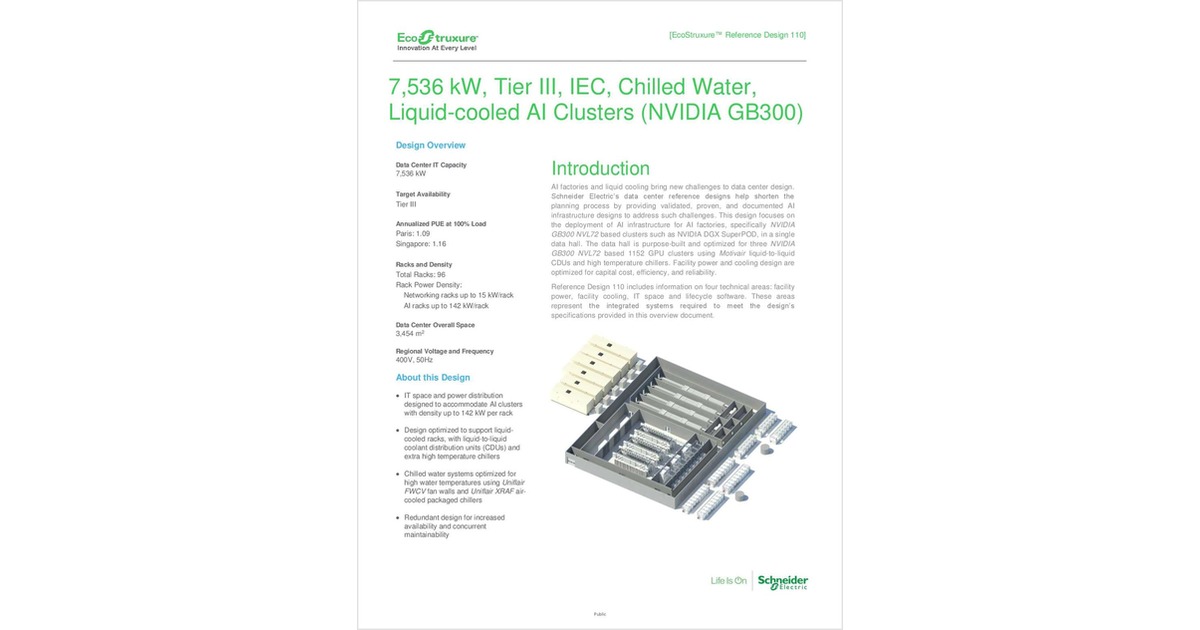
7,536 kW, Tier III, IEC, Chilled Water, Liquid-cooled AI Clusters
This design tackles AI infrastructure challenges by optimizing power and cooling for GPU clusters up to 142 kW per rack. The Tier III setup achieves a PUE of 1....
 White Paper
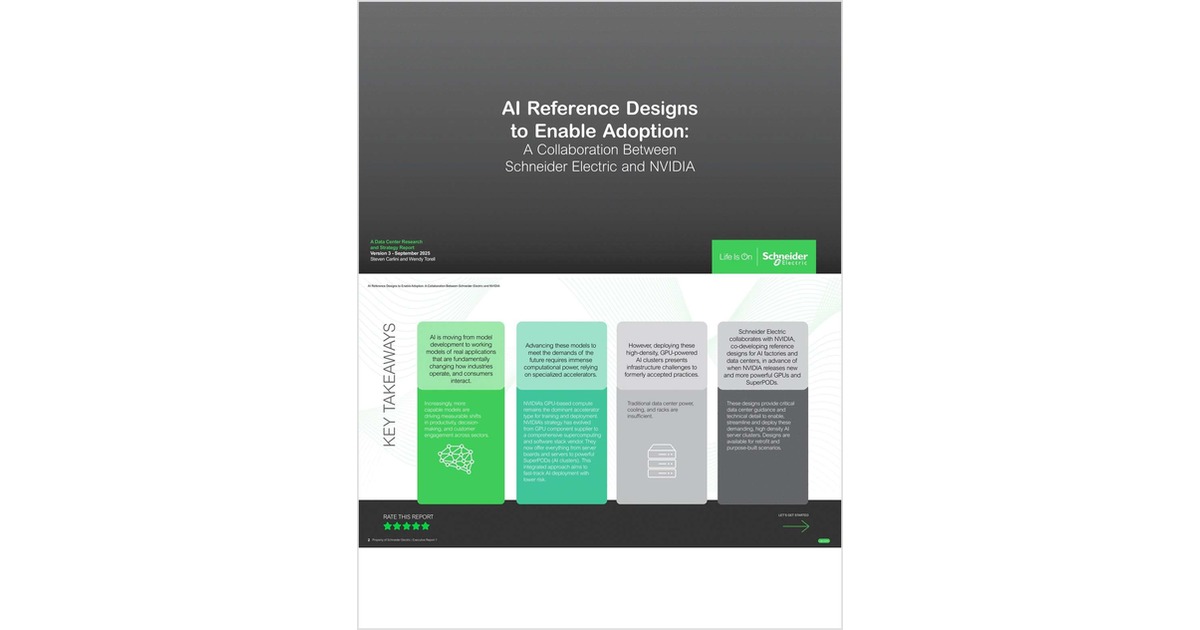
AI Reference Designs to Enable Adoption A Collaboration Between Schneider Electric and NVIDIA
Schneider Electric and NVIDIA have developed reference designs for AI data centers, addressing challenges of high-density GPU clusters. These blueprints support...
 Report
Data Center Capabilities: Today & Tomorrow
We are entering a period of unprecedented pressure as AI adoption accelerates, energy constraints tighten, and expectations around uptime and cybersecurity cont...